

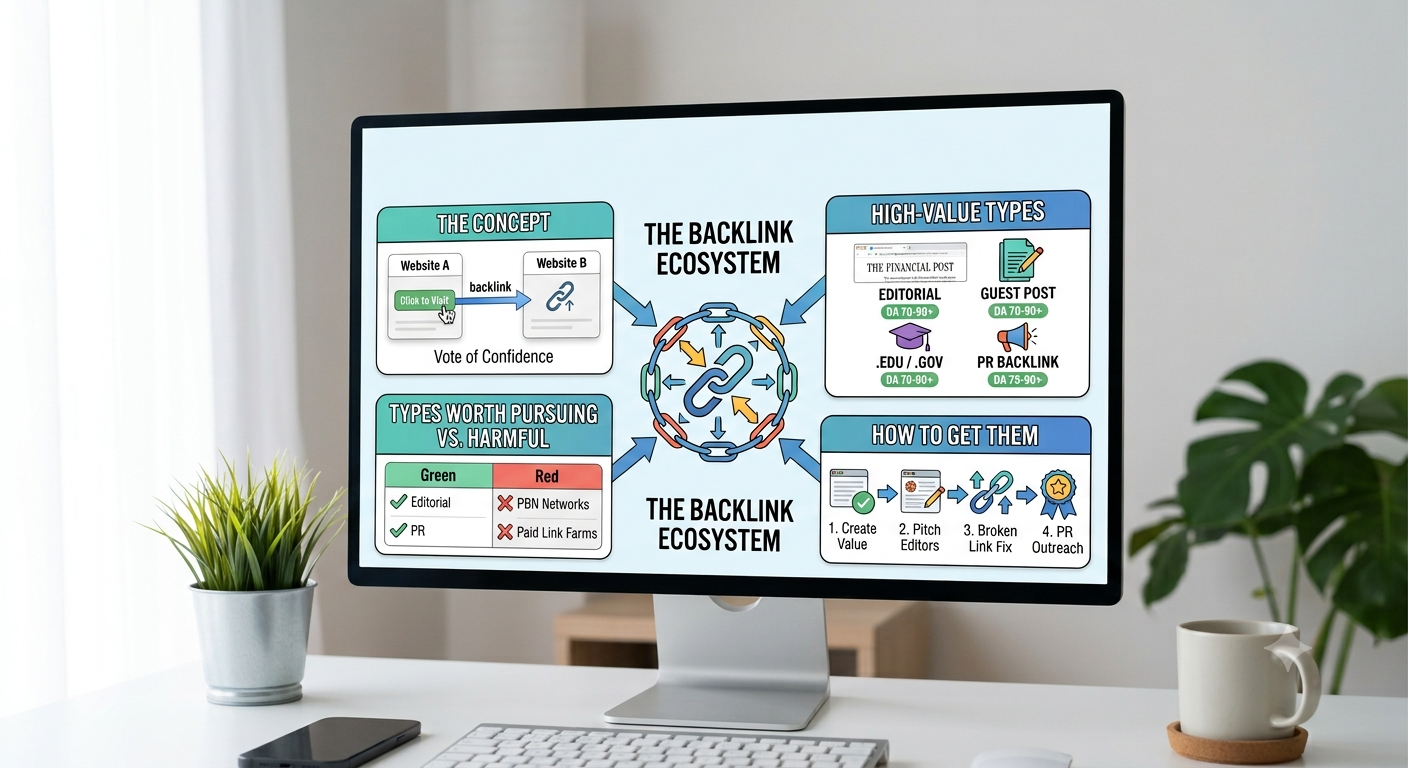
Most SEO guides tell you backlinks matter. Few explain why some backlinks move rankings while others trigger penalties. This post covers what backlinks actually are, shows you real-world examples, breaks down the types worth pursuing, and gives you a practical strategy for building them.
Thank you for reading this post, don't forget to subscribe!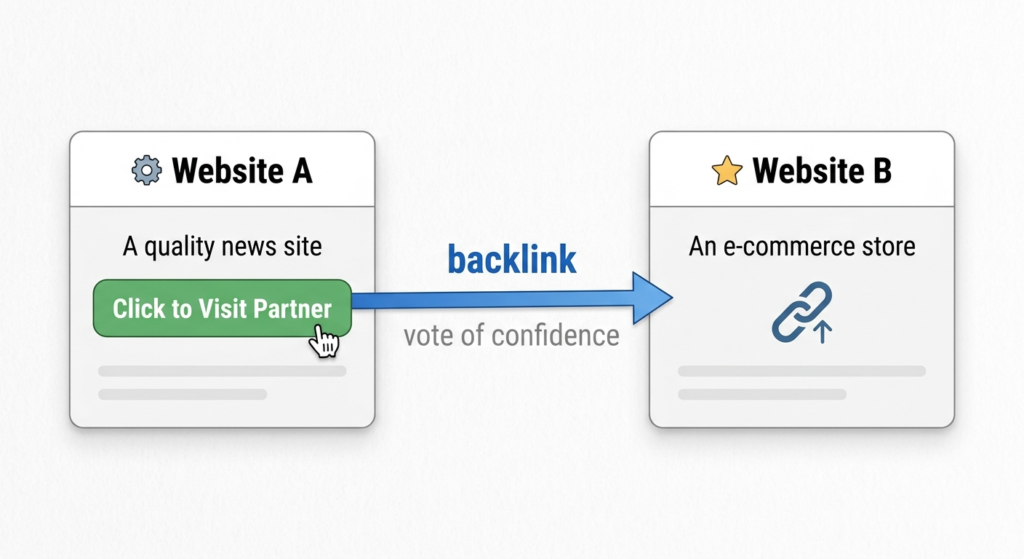
What Is a Backlink?
A backlink is a hyperlink on one website that points to a page on another website. Search engines treat each backlink as a vote of confidence. The more credible the site casting that vote, the more weight it carries.
That definition sounds simple. The complexity starts when you realize not all votes are equal — and some votes actively hurt you.
Backlinks are also called inbound links or incoming links. In HTML, they look like this:
<a href=”https://yoursite.com”>anchor text here</a>
The anchor text, the source domain’s authority, the placement context, and whether the link passes equity all determine how much value that link delivers.
Pages that rank #1 on Google have 3.8x more backlinks than pages ranking in positions 2 through 10. That single data point tells you everything about how seriously search engines weight this signal.
Real Backlink Examples
Backlinks appear across the web in different forms. Here are concrete examples of what they look like in practice.
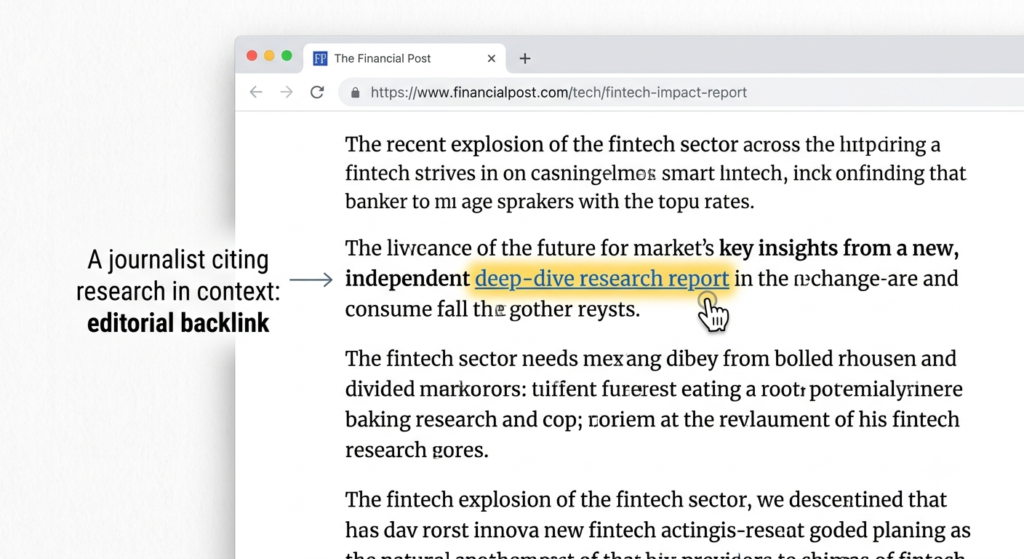
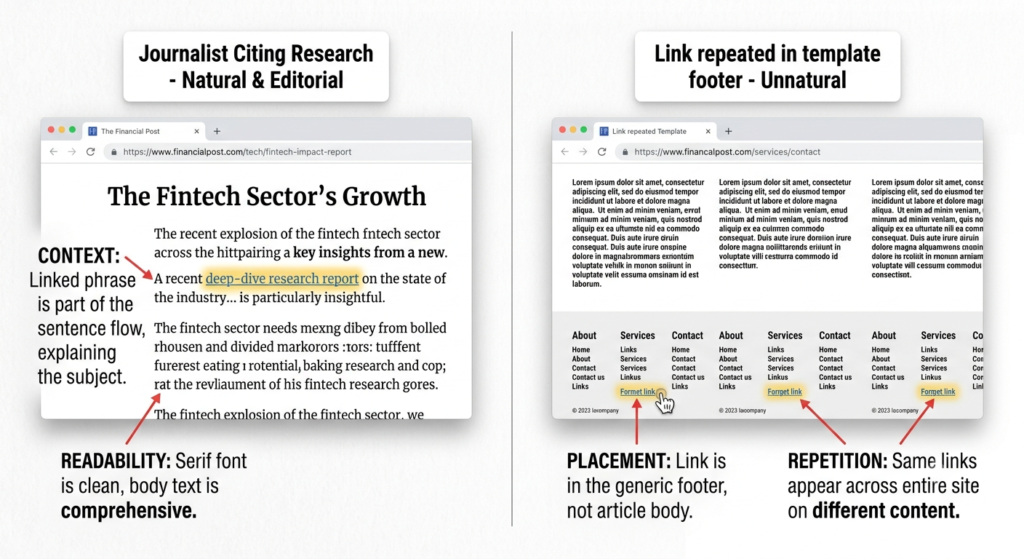
Editorial backlink: A journalist writing about cybersecurity trends links to a research report you published. You did not ask for the link. The journalist found your data credible and cited it. That is an editorial backlink — and the most valuable kind.
Guest post backlink: You write an article for a marketing publication in your niche. Inside the author bio, there is a link back to your site. That is an author bio backlink earned through guest posting.
Business profile backlink: Your company has a profile on LinkedIn, Crunchbase, or Yelp. Each of those profiles contains a link to your website. That is a business profile backlink.
Contextual backlink: A food blogger writes a recipe guide and links to a specific kitchen tool on an e-commerce site within the body of the article. The link sits inside relevant content. That is a contextual backlink.
.edu backlink: A university scholarship page links to your company’s scholarship application. That link comes from a .edu domain and carries significant authority because educational institutions are treated as high-trust sources.
Types of Backlinks
There are dozens of backlink types. Most fall into a few core categories that determine their value.
Dofollow vs. Nofollow
Dofollow links pass link equity — what SEOs call “link juice” — to the target page. These directly influence rankings.
Nofollow links carry the rel=”nofollow” attribute. They do not pass equity. Common sources include blog comments and some social media platforms. They still drive traffic and build brand visibility, but they do not move rankings on their own.
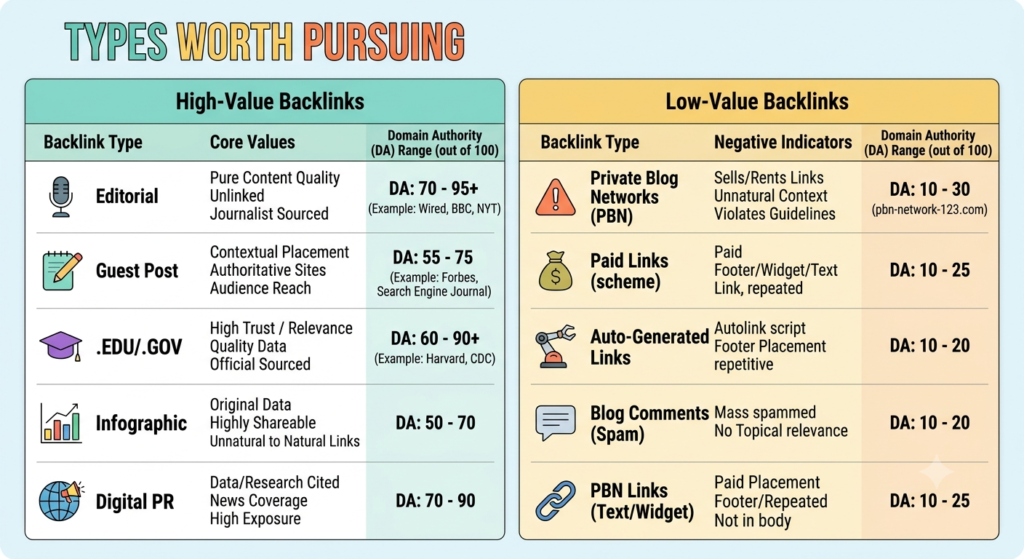
High-value link types to pursue:
- Editorial backlinks — given without asking, based purely on content quality
- Guest post backlinks — earned by contributing articles to authority sites in your niche
- Contextual backlinks — embedded inside relevant body content, not footers or sidebars
- .edu and .gov backlinks — from educational and government domains; highly trusted by search engines
- Infographic backlinks — earned when other sites embed your visual content
- Niche edit backlinks — inserted into existing relevant articles on established pages
- Digital PR backlinks — from news sites that cite your data, research, or expert commentary
Good Backlink Examples vs. Bad Backlink Examples
This is where most guides go wrong. They list backlink types without explaining what separates a link that helps from a link that harms.
Good backlink characteristics:
- Comes from a site with genuine organic traffic
- Is topically relevant to your content
- Appears inside the body of an article, not in a footer or widget
- Uses natural anchor text that reads like a real sentence
- Was not paid for directly in exchange for link placement
A tech startup earns a backlink from Wired Magazine after a reporter covers their product launch. That single link from a high-authority, relevant domain can outperform hundreds of links from low-quality directories.
Bad backlink characteristics:
- Comes from a link farm or Private Blog Network (PBN)
- Has no topical relevance to your site
- Was auto-generated by a script
- Sits in a footer repeated across thousands of pages
- Was purchased through a scheme that violates Google’s guidelines
A local bakery buys 500 links from a PBN. The links come from unrelated sites — gaming blogs, travel directories, unrelated forums. Google’s algorithms identify the unnatural pattern. The site loses rankings instead of gaining them.
The risk is real. Rapid increases in backlinks from low-quality or irrelevant domains are a red flag that manual reviewers and algorithmic filters both target. Monitoring your backlink profile regularly with tools like Ahrefs or SEMrush is not optional — it is maintenance.
How to Get Backlinks
Building backlinks is time-consuming. The shortcuts are the ones that get sites penalized. Here are the strategies that actually hold up.
1. Create content worth linking to
Backlinks follow value. Original research, detailed how-to guides, unique data sets, and well-designed visual assets all attract links naturally. Articles over 2,000 words generate significantly more backlinks than shorter content — not because length is the goal, but because depth signals authority.
Ask yourself before publishing: would another writer in my niche cite this as a source? If the answer is no, the content is not ready to earn links on its own.
2. Guest post on relevant, authoritative sites
Find publications in your niche that accept contributor submissions. Pitch articles that deliver genuine value to their readers. The backlink in your author bio or within the article body earns you domain authority from an established source.
One warning: guest posting on low-quality sites that exist solely to sell links is the same risk as a PBN. Evaluate the target site’s organic traffic and editorial standards before pitching.
3. Convert unlinked brand mentions
Search for your brand name across the web. When another site mentions you without linking, contact the editor and request a link. They already know your brand. The ask is straightforward, and the conversion rate is higher than cold outreach.
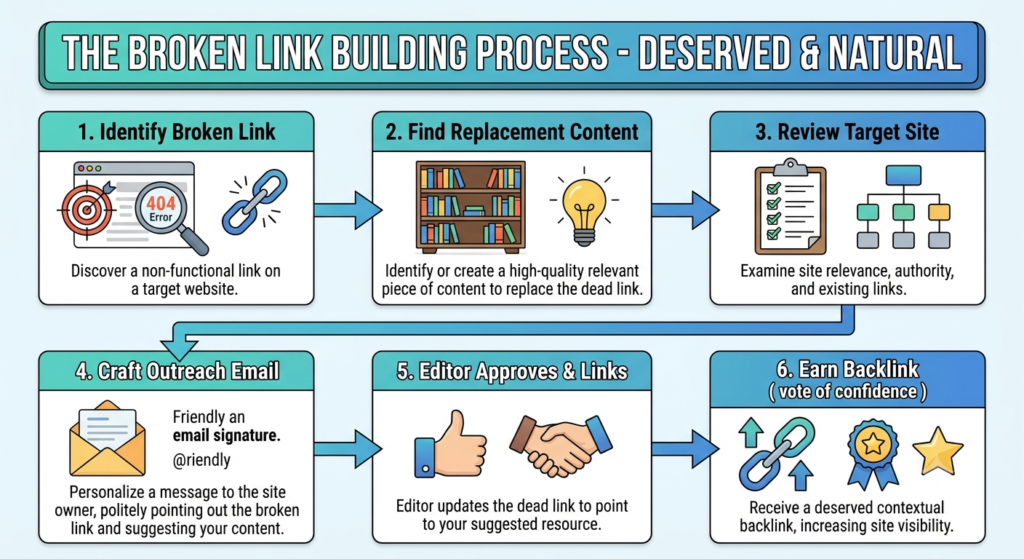
4. Use broken link building
Find pages in your niche that link to dead pages (404 errors). Offer your content as a replacement. Tools like Ahrefs’ broken link checker make this process efficient. You solve a problem for the editor while earning a contextual backlink.
5. Build legitimate business profiles
List your site on credible directories and platforms: Google Business Profile, LinkedIn, Crunchbase, industry-specific directories. These links are low-impact individually but contribute to a diverse, natural-looking backlink profile.
6. Earn links through digital PR
Publish original data, surveys, or expert commentary that journalists want to cite. Use platforms like HARO (Help a Reporter Out) to respond to media queries in your industry. A single mention in a national publication delivers both a high-authority backlink and significant referral traffic.
7. Create shareable visual assets
Infographics, charts, and data visualizations get embedded and shared across other sites. When someone embeds your infographic, they typically include a link back to the source. One well-designed asset can generate dozens of backlinks over time.
Build Backlinks Like They Matter Long-Term
Shortcuts in link building do not save time. They borrow time from a future penalty you will have to recover from. The sites that build durable search rankings do it by creating content that deserves links and by earning them through legitimate outreach, digital PR, and community credibility.
Start by auditing your existing backlink profile. Identify your strongest links and replicate the strategy that earned them. Then identify gaps — topical areas where competitors have links and you do not.
That is where your next link-building campaign begins.


Comments are closed